
The DGD-Economic and Social Empowerment of Adolescents and Youth between 14 and 29 years of age project, implemented by the de Waal Foundation (FdW) in partnership with Plan International Ecuador, has generated significant impacts in rural communities in the provinces of Los Ríos and Bolívar. To learn first-hand about the objectives, scope, methodologies and lessons learned from this initiative, we spoke with Lupita Martínez, project monitor and coordinator, who shares her experience on the work done with adolescents, youth and families, emphasizing female leadership, family co-responsibility and the construction of safe and violence-free environments.
What are the objectives of the project and what is it about?
Lupita Martínez: Our project is aimed at promoting the rights of girls, boys, adolescents and young people, with a special focus on gender equality and violence prevention. We also sought to strengthen the leadership, autonomy and empowerment of women and adolescents in particular. We also seek to provide them with tools, knowledge and practices that contribute to their life projects and promote assertive decision-making. Likewise, we seek to generate a commitment with fathers and mothers in positive parenting, that they get involved in decision making with their children and that they are a support, and not people who judge them. What we also tried to promote is co-responsibility in the home, within the families, both husband and wife, and that the children are also involved.
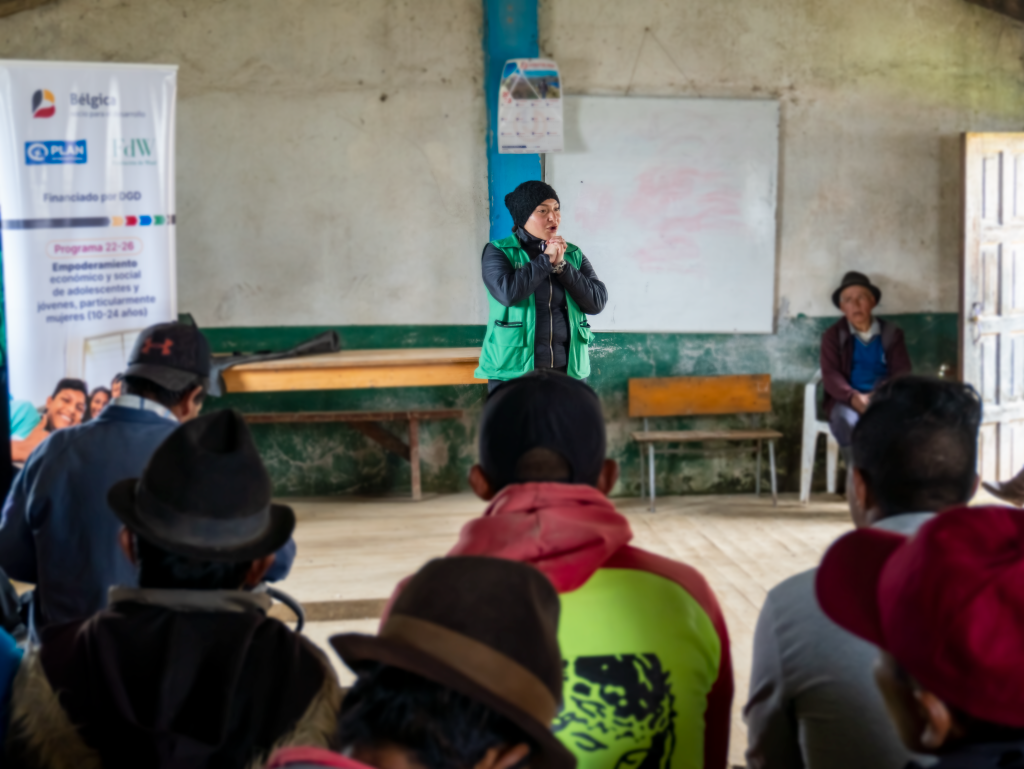
In accordance with the planning that was carried out some time ago, it was determined as a central objective that adolescents and young people, especially women, improve their opportunities in terms of socio-cultural and economic leadership, in safer, resilient and violence-free environments in the rural communities of the provinces of Bolivar and Los Rios.
When did this project start and which organizations were in charge?
The organizations that were responsible for the execution of this project, which was developed with funds from the Belgian Development Cooperation, landed with Plan International-Belgium and was channeled through Plan International-Ecuador. Plan International-Ecuador sought partners to support the implementation of the social and economic components of the project. The social component was in charge of Fundación de Waal and the economic component was in charge of Fundación Codespa.
The planning or structuring was done at the end of 2020, with the search for implementing partners, the structuring as such and the financing. Our involvement started at the end of 2021, with the presentation of our proposal, the induction and we started our work in 2022, in the Ventanas and Urdaneta cantons in the province of Los Ríos and Simiatug, in the province of Bolívar. These places were specifically analyzed due to the vulnerability of both territories. They are vulnerable rural communities due to the economic issue and the learning deficits observed in their population. Likewise, the incidence of domestic violence is high, and these are very conflictive areas that require social assistance.
In this gender focus that was given, we as FdW worked on the aspect of non-sexist cultural patterns, because the custom of men as decision-makers is deeply rooted, as they are the ones who lead the household. What we wanted to do was to show them that women can also be leaders, empower themselves, take the lead in their homes, lead certain processes from the home and a little higher, in the political and economic spheres.
Working with adolescents allows us to start these processes earlier, when they are young, and make them protagonists, so that they can catapult themselves into decision making.

How many people were benefited and impacted by the project?
During the execution of these three years we had established goals and we surpassed them. The estimated impact was 460 people between mothers, fathers and caregivers. We reached a total of 897 people sensitized and impacted. Regarding adolescents, the proposed goal was 255 adolescents and we reached 932. All this considering the people who at least once attended our training sessions, awareness-raising activities and were able to promote these key messages in their homes.
What activities were carried out in this project?
We managed the results of the social component, which consists of empowering adolescents in their life plan so that they can be leaders and in the empowerment part. And our other component or result was to work first with the adolescents so that they can be decision-makers, together with parents and caregivers. In the first place, we worked with the strengthening of adolescent clubs, strengthening the knowledge of fathers, mothers and caregivers, with activities such as awareness-raising workshops, which included the sons and daughters, with the parents. In the case of adolescent girls, workshops that promoted leadership and empowerment. The formation of adolescent clubs was promoted, where they carried out recreational activities, but at the same time knowledge was imparted and their empowerment was recorded through recreational activities.
Within the FdW we use the five-step methodology, which includes playful aspects. With games and sports encounters, knowledge gymkhanas and awareness-raising workshops. This same method was used with fathers and mothers. Everything was focused on the prevention of violence, gender equality and shared roles.

One of the best aspects of this project for us, as FdW, was that we made methodological transfers with Plan International. While it is true that Plan International is an organization that has established its methodologies, they shared them with us and we made the adaptations. They have a very marked methodology called Leadership Schools and Champions for Change. Regarding the Leadership Schools, they focus on the training of adolescent women, so that they can be leaders and be part of the movement Por Ser Niña, a movement that is clearly of this organization. And the Champions for Change is a training school where adolescent boys can be protectors of girls, preventing all acts of violence against girls or adolescent women, even against their mothers.
Together with the teenagers and parents, we built these schools and adapted them to implement the FdW’s five-step methodology.
What have been the main achievements of the project during these three years?
We have had many achievements, but among those that stand out the most are undoubtedly the strengthening of leadership and empowerment in adolescents and young people. We achieved this because we reached more than 900 adolescents, who participated very actively in the training processes. And what we saw is that they greatly improved their leadership and decision-making skills, the autonomy they have today, and this is reflected in an improvement in the construction of their life project, in which we support them.
Another achievement was the promotion of safe spaces free of violence. What we were looking for was for their homes to be the first refuge where they can seek help, as well as allied institutions that are protectors and guarantors of rights, such as the Prosecutor’s Office, health centers, the Student Counseling Department, the Ministry of Education. Another achievement, which was also evident and quite noticeable, was the involvement of mothers, fathers and caregivers in the issue of positive parenting. They became a little more involved in the activities that their sons and daughters carried out and learned from them as well. So it was a two-way learning process. The co-responsibility of fathers and mothers in the upbringing, in that sharing, and logically with the protection of their children was also quite evident and marked.

What other lessons learned from the implementation of this project?
One of the lessons learned was the search for strategies to turn the challenges we faced into opportunities. One strategy was to generate spaces where fathers could get involved in order to achieve their empowerment, through the search for opportunities, for example, sports meetings. In these spaces we consolidated their participation, they have felt like participants and protagonists and we were able to reach our goal effectively, with the rural communities respecting their idiosyncrasy.
One of the greatest achievements is that from the DGD project that we implemented here in Ecuador, we were able to generate other projects in other FdW offices in Honduras, El Salvador and Bolivia.
The DGD project has demonstrated that the empowerment of adolescents and youth, especially women, is a transformative process that transcends the individual and reaches out to families and communities. Throughout its three years of implementation, the initiative not only surpassed its coverage goals, but also strengthened leadership skills, promoted more equitable family relationships and contributed to the prevention of violence by creating safe spaces for dialogue. This work is consolidated as a successful experience that opens new opportunities for replication and expansion in other countries in the region, reaffirming the commitment of the de Waal Foundation and its partners to social development and gender equality.